

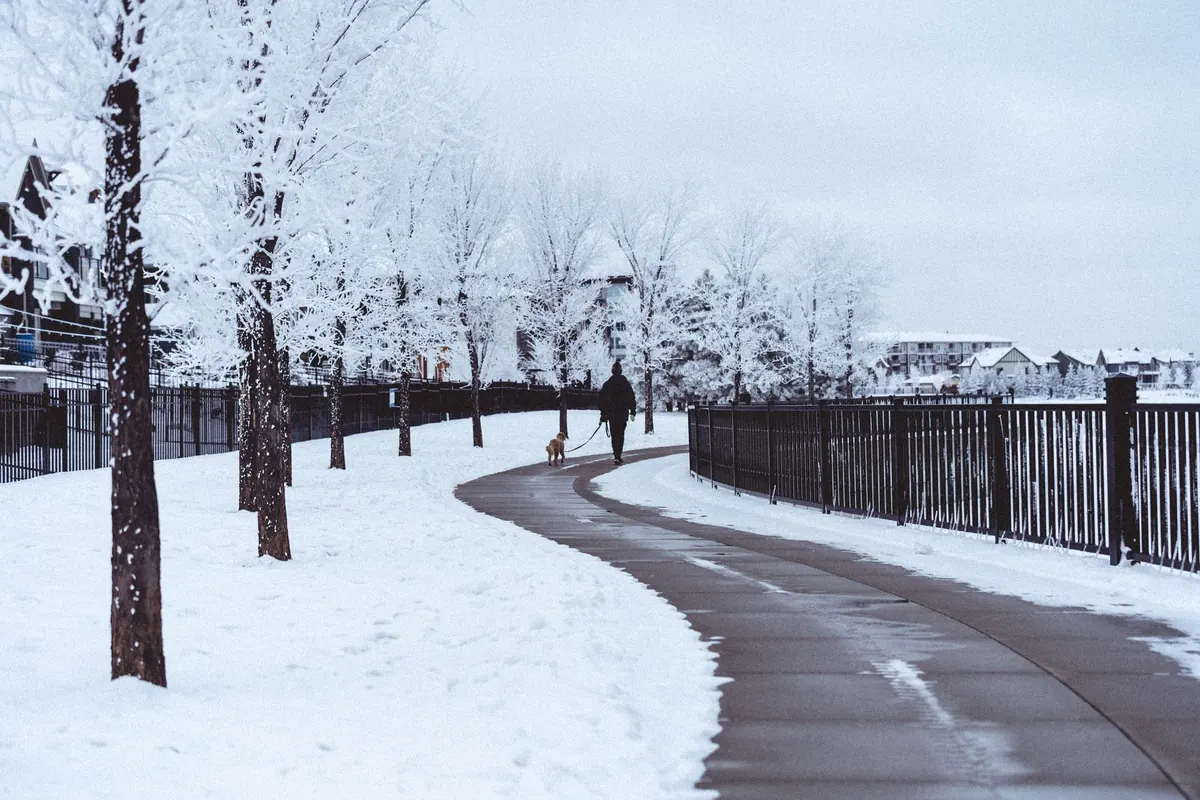

The first genuinely cold morning of the year turns a walk into a negotiation. You open the door, feel the air hit your face, and reconsider the loop you had planned. Usually it is still worth it. Cold-weather walking is less about toughness than logistics: what you wear, what you carry, where you go, and when you turn around. Get those four things right and winter becomes one of the nicest seasons to be outside — quiet paths, sharp air, empty trailheads.
Build the Layer System First
Layers work because they let you fine-tune. You are never dressed correctly for a whole walk; you are dressed correctly for the next twenty minutes. Aim to start slightly cool. If you are toasty while standing in your hallway, you will be soaked and miserable ten minutes in.
Base layer
Choose a thin, snug layer that moves sweat away from your skin — merino wool or a synthetic fabric. Cotton is the one to leave at home for winter walks. It holds moisture, sits cold against you, and takes hours to dry.
Mid layer
This is your insulation: fleece, wool, or a light synthetic puffy. It traps warm air without adding much weight. For a brisk walk in mild cold, you may only need this over a base layer.
Outer shell
A windproof and water-resistant jacket blocks the two things that rob heat fastest. Look for pit zips or a two-way front zip so you can vent without stopping to strip.
The adjustment habit matters more than the clothing. When you feel the first flush of heat on your back, open a zip or take off a hat. You want to stay just short of sweating.
Hands, Feet, Head, and Face
Your body protects its core before it protects your fingers and toes, which is why extremities get cold first. Deal with them deliberately.
- Hands: Mittens keep fingers together and warmer than gloves. Wear thin liner gloves underneath so you can use a phone or a zipper without exposing bare skin.
- Feet: Wool or synthetic socks, not cotton, and boots with room to wiggle your toes. Tight footwear restricts circulation and guarantees cold feet.
- Head and neck: A hat that covers your ears, plus a neck gaiter you can pull over your chin when the wind picks up.
- Face: A thin balaclava or buff handles biting wind. On bright days with snow on the ground, a little sunscreen and lip balm is worth packing — snow bounces light back up at you.
Drink and Eat, Even When You Don't Feel Like It
Cold air mutes thirst, so people finish winter walks dehydrated without noticing. You are still losing fluid through sweat under all those layers, and breathing cold dry air adds to it. Carry an insulated bottle — a regular one can freeze solid on a long walk — or a small thermos of something warm.
Food matters too. Your body burns more energy staying warm, and a snack that is frozen rock hard is useless. Keep nuts, dried fruit, or a granola bar in an inside pocket where your body heat keeps it chewable. If you want something warm, soup in a thermos is a genuinely good idea on a long route.
Skip the celebratory drink before you head out. Alcohol makes you feel warm by pushing blood toward your skin, which actually speeds up heat loss.
Make Yourself Impossible to Miss
Winter daylight is short, and a walk that starts in the afternoon can end in dusk. Drivers are dealing with fogged windows, low sun, and slippery roads. Do not rely on being seen.
- Wear something reflective, not just something bright. A cheap reflective vest or armbands work better than a light-coloured jacket.
- Carry a small headlamp or hand torch, with spare batteries, even on a route you know well.
- Choose lit pavements, park loops, or well-used paths when walking after work.
- Where there is no pavement, walk facing traffic so you can step aside if a car drifts.
- Tell someone your route and expected return time, and keep your phone warm in an inside pocket — cold drains batteries fast.
Route Planning for Short, Slippery Days
Winter is not the season for ambitious new terrain. Pick a route you know, then adjust it for the conditions of the day. A simple out-and-back along a familiar path beats a loop you have never walked, because you can turn around at any point without getting lost.
- Check the forecast, and pay more attention to wind chill than temperature. Wind is what makes a walk feel brutal.
- Note when sunset is, then subtract thirty minutes as your hard turnaround.
- Think about surface: shaded paths, bridges, and steps stay icy long after sunny stretches have cleared.
- Identify bailout points — a bus stop, a café, a friend's house — along the way.
- Stick to maintained paths if you are walking alone. Deep snow and unmarked trails are a different activity with different gear.
Watch for the Signals That Say Turn Around
Cold injuries build quietly. Shivering that you cannot stop, numb or clumsy fingers, fumbling with a zip, slurred speech, or a sudden heavy tiredness are all reasons to stop, add layers, eat something, and get somewhere warm. Do not try to walk it off.
Turn around while you are still enjoying the walk. The route will be there next week.
Cold air can be hard on lungs and heart, particularly during exertion. If you have a heart or lung condition, asthma, Raynaud's, or any health concern that cold makes worse, speak to a healthcare professional about what is sensible for you, and carry any prescribed medication with you.
The Five-Minute Door Check
Before you step out, run through this quickly:
- Base layer dry, mid and shell on, hat and mittens in hand.
- Insulated water and a snack that will not freeze.
- Reflective gear and a light.
- Phone charged and warm, someone knows where you are.
- Turnaround time decided.
That is the whole system. Dress in layers you can adjust, protect your hands and feet, drink before you are thirsty, make yourself visible, and plan a route you can leave at any moment. Do that and the cold morning stops being a negotiation — it becomes the best part of the day.