





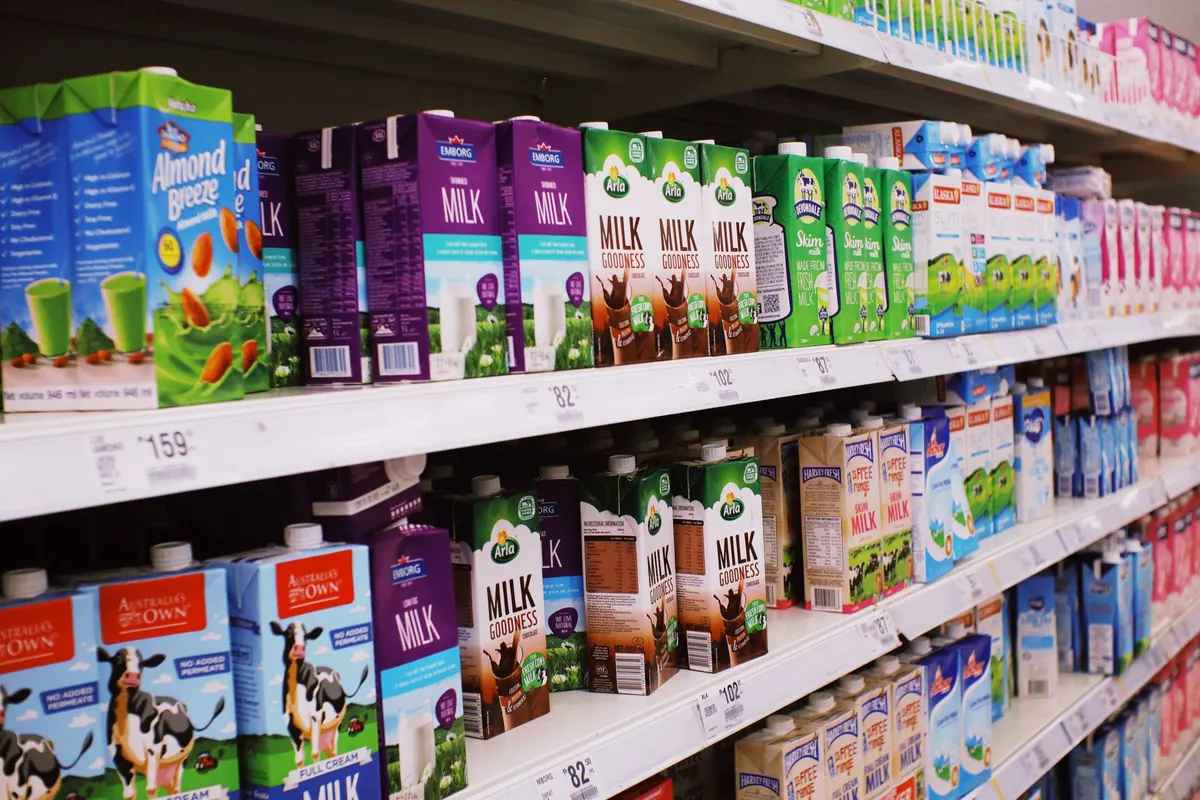
Two boxes of granola. Same shelf, similar price, both promising "wholesome." One carries 12 grams of added sugar per serving; the other carries 5. The only way to tell them apart is to flip the box and read four lines, which takes less time than choosing a checkout lane.
Nutrition panels look dense because they are designed for legal completeness, not for people shopping on a Tuesday night. You do not need most of what is printed there. You need a fixed order of operations, so you check the same handful of things every time and move on.
Four lines, one order, every time. That is the whole method.
Everything Hinges on the Serving Size
Start at the top. Serving size anchors every number below it, and servings per container tells you how much food is really inside the package.
This is where most comparisons fall apart. One cereal lists three-quarters of a cup; the next lists a full cup. At a glance the second looks heavier in calories and sugar, but if you pour a cup either way, you are comparing your real bowl against their smaller one. Choose the amount you actually eat, then compare on that basis.
Bottles are worse. A smoothie that reads like a single drink might be listed as two and a half servings, quietly multiplying whatever number caught your eye. If you would finish it in one sitting, do the math.
The two-second test
Before reading a single gram, ask whether the serving matches what you would eat. If it does, keep going. If it does not, adjust now or put the package back.
Added Sugars: Read This Line Before Total Sugars
Total sugars lumps together what was always there and what was poured in. Milk has lactose and fruit has fructose; neither is the same as syrup added during manufacturing, and the label separates them for you.
Added sugars is the line to compare. Four grams is roughly a teaspoon, so a flavored yogurt with 16 grams of added sugar holds about four teaspoons of sweetener. Two similar yogurts might differ by 10 grams, which is two and a half teaspoons and an easy win.
Check the ingredient list as well, since sugar travels under many names: cane juice, brown rice syrup, malt syrup, honey, dextrose. Ingredients are listed by weight, so a sweetener appearing in the first three is a strong signal.
If you are managing blood sugar or another condition, general label advice only goes so far. Ask your doctor or a registered dietitian about targets that fit you.
Fiber: The Number That Does the Most Work
Fiber slows digestion, keeps you full longer, and feeds gut bacteria. You do not need the biology to shop with it. You need a threshold.
Three grams per serving is respectable in bread or crackers. Five or more is strong for cereal, pasta, or beans. When two products look otherwise identical, higher fiber usually wins.
A ratio trick worth knowing
Compare fiber against total carbohydrates. A bread with 30 grams of carbs and 2 grams of fiber is mostly starch; one with 20 grams of carbs and 4 grams of fiber is doing more work. A rough target: at least 1 gram of fiber for every 10 grams of carbohydrate. Then check the first ingredient, because "whole wheat flour" beats "wheat flour," which is usually refined flour with a friendlier name.
Sodium: Quiet, Everywhere, Worth a Glance
Sodium rarely tastes salty in the foods that carry the most of it. Bread, cheese, deli meat, sauces, and canned soup top the list, and bread adds up fast because you eat it several times a day without thinking.
Use the percent Daily Value column as a traffic light: about 5% or less is low, 20% or more is high. A soup with 750 mg per cup is a heavy choice; one with 300 mg fits into a normal day more easily.
Small moves help. Rinsing canned beans washes off surface salt, and "no salt added" canned tomatoes taste the same once you season them yourself.
The Five-Minute Walkthrough
Work in this order and you will not freeze in the aisle:
- Find the serving size and servings per container. Decide whether that is your portion.
- Set one comparison basis. Two products, same basis, or the numbers mean nothing.
- Check added sugars. Lower is better, especially in foods you eat daily.
- Check fiber. Higher is better most of the time.
- Check sodium. Stay under the high-Daily-Value mark for everyday items.
- Skim the first three ingredients. If sugar or refined flour leads, you know what you are buying.
- Decide. Ten seconds, one choice. Perfect is not the goal.
Practice on Two Products, Then Stop Reading Labels
The real skill is not memorizing numbers. It is building a shortlist of foods you have already checked, so most shopping trips need no reading at all. Pick one category this week, whether yogurt, bread, or pasta sauce, and compare three options in the store. You will probably find a favorite that is better on all four lines, and you will buy it without thinking ever after.
One caveat: a label describes a single food, not your whole plate. A granola with 9 grams of added sugar is not a problem if the rest of your day is varied and mostly whole foods. Use the panel to compare and to notice, not to grade yourself at the register.
Photo: Nothing Ahead / Pexels