




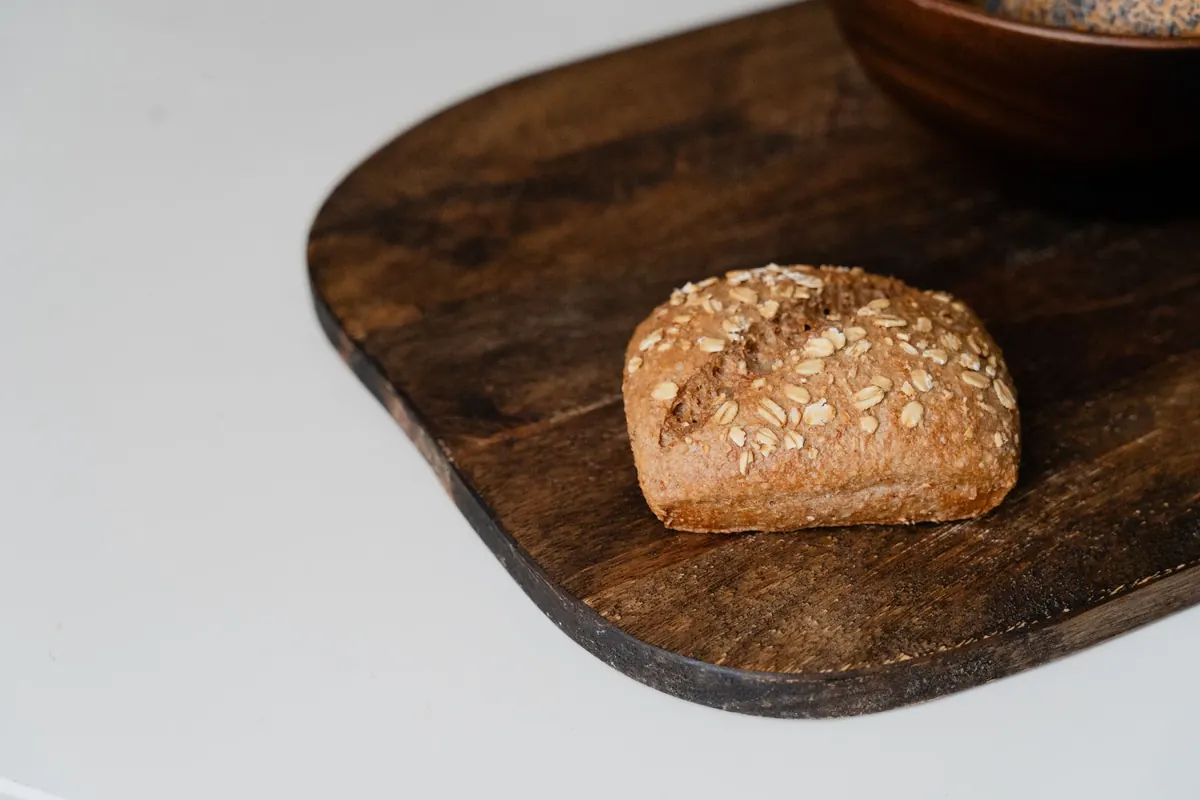
Oat flour has a reputation as a specialty ingredient, the kind of thing you buy in a small expensive bag and use exactly once. It doesn't have to be that way. If you own a blender, a food processor, or even a coffee grinder, and there's a bag of rolled oats in your pantry, you can make oat flour in about two minutes. The homemade version tastes sweeter and nuttier than the bagged stuff, because whole grain flours lose their freshness as the oats' natural oils age.
What you do with it matters just as much as how you grind it. Oat flour gives muffins a tender, faintly sweet crumb and makes cookies chewier and softer. It also behaves differently from wheat flour, so measuring and substitution take a little thought. Here's the full process, from oats to a warm tray of muffins.
Why Grind Your Own Oat Flour
Commercial oat flour is ground fine and consistent, and there's nothing wrong with it. Homemade tends to be slightly coarser, which is fine in muffins, cookies, pancakes, and quick breads. It simply reads as a heartier texture.
The real advantages are cost, freshness, and control. Rolled oats are cheap, and a cup of them becomes a cup of flour with no extra shopping trip. You can also decide how fine to grind: pulse briefly for a rustic flour with visible flecks of bran, or run it longer for something closer to what you'd buy. And you can toast the oats first for a deeper flavor, which is hard to find in a package.
What You'll Need
- Rolled oats or quick oats. Old-fashioned rolled oats give the best flavor and grind cleanly. Quick oats work too and produce a finer flour faster.
- A blender, food processor, or spice grinder. A high-speed blender gives the most even result, but any of these will do the job.
- A fine-mesh sieve. Optional, but it separates the fine flour from the stubborn flakes.
- A jar with a tight-fitting lid. For storage.
- A kitchen scale. Optional, though it removes all guesswork from measuring.
Skip steel-cut oats. They're too hard for most home blades and stay gritty no matter how long you grind. Skip flavored instant packets as well, since the sugar, salt, and dried fruit in them will throw off a recipe.
How to Grind Oats Into Flour
- Fill the bowl or jar halfway at most. Oats need room to circulate. Working in batches of one cup beats one big clogged batch.
- Pulse rather than blend on high. Ten to fifteen second bursts, scraping down the sides between them. Running the motor continuously heats the flour, which makes it clump and dulls the flavor.
- Grind for 30 to 60 seconds total. Stop when a pinch rubbed between your fingers feels like fine sand rather than pebbles.
- Sift if you want consistency. Push the fine flour through a sieve and return the larger flakes to the grinder for another pulse or two. This step is what separates decent oat flour from great oat flour.
- Cool before storing. Warm flour traps steam in the jar, and steam turns to clumps.
Weight doesn't change when you grind, only volume. A cup of rolled oats weighs around 90 grams, and it produces roughly 90 grams of flour. By volume you'll end up with slightly less than a cup, because flour settles more densely than whole flakes. That's normal.
If You Want a Nuttier Flavor
Spread oats on a sheet pan and toast them at 350°F for 8 to 10 minutes, stirring once, until they smell like oatmeal cookies. Let them cool completely before grinding, or you'll get paste instead of flour. Toasted oat flour is excellent in chocolate chip cookies and in muffins with banana or apple.
Measuring Oat Flour Correctly
Oat flour compacts easily, so scooping straight from the jar can add far more flour to a recipe than you intend, and extra flour means dry, dense baking. Spoon the flour into your measuring cup, then level it with the flat side of a knife. Don't tap the cup on the counter and don't press the flour down.
If you have a scale, use it. A cup of oat flour weighs somewhere between 90 and 100 grams depending on how finely it's ground. Pick one number and stay consistent with it across recipes, and your results will be repeatable.
Rule of thumb: in muffins and cookies, oat flour can replace up to half the all-purpose flour without any other changes. Beyond that, add a binder and a little extra liquid.
Substituting Oat Flour in Muffins
Oat flour contains no gluten, so it can't build structure the way wheat flour does. In muffins this matters less than you'd think, because muffins rely on baking powder, eggs, and a gentle mixing hand.
Start by swapping half the all-purpose flour for oat flour. Add one to two tablespoons of extra milk or buttermilk per cup of oat flour, since oats absorb more liquid than wheat. Let the batter rest for 10 to 15 minutes before filling the cups; it will thicken noticeably as the flour hydrates.
For a fully oat flour muffin, give the batter some help. Add a tablespoon of cornstarch or tapioca starch per cup of oat flour for a lighter crumb, use about 1¼ teaspoons of baking powder per cup of flour instead of the usual teaspoon, and include an extra egg or a flax egg as a binder. Fill the cups a little fuller than usual, bake at the same temperature, and start checking three to five minutes early. Oat flour browns faster than wheat.
Substituting Oat Flour in Cookies
Cookies are the easiest place to experiment, because chewiness is usually a virtue. Oat flour makes cookies softer, chewier, and less spread out, which is welcome in drop cookies and a problem in anything that needs to hold a crisp shape.
Replace up to half the flour, or go all in with a binder. About half a teaspoon of xanthan gum per cup of oat flour helps a fully oat-based cookie hold together, and an extra egg yolk adds richness and structure. Chill the dough for 30 minutes before baking to keep the cookies from spreading into puddles. Bake one to two minutes less than the recipe suggests and let them finish setting on the hot pan.
Flavor pairings that work especially well: brown sugar instead of white, cinnamon, toasted oats, dark chocolate, and a pinch of flaked salt on top.
One note if you avoid gluten for medical reasons: oats are naturally gluten-free, but they're often grown and milled alongside wheat, so cross-contamination is common. Choose oats labeled gluten-free, and check with your doctor or dietitian about how oats fit into your diet before relying on them.
Make the First Batch This Week
Start small. Grind one cup of oats, sift it, and bake a batch of muffins with half oat flour and half all-purpose. Write the date on the jar, because fresh oat flour keeps about a month or two in a cool, dark cupboard and three months in the freezer. Bring frozen flour to room temperature before baking so it doesn't seize the liquid in your batter.
If it smells like crayons or old paint, throw it out and grind more. That takes two minutes, which is the whole point.
Photo: Anh Nguyen / Pexels